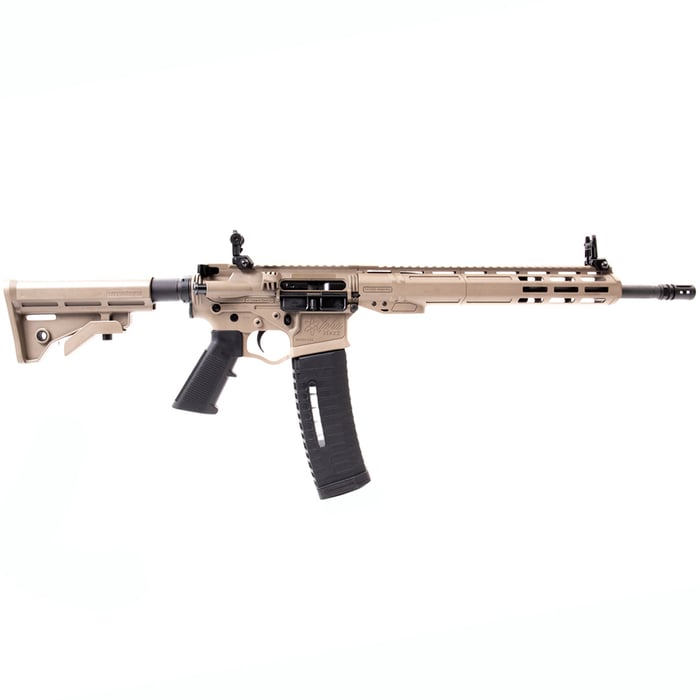
Essential Military Gear Accessories
Essential Military Gear Accessories
Your primary weapon is just the starting point. In the field, the difference between a basic firearm and a mission-ready system comes down to the accessories you bolt, clip, and mount to it. A standard-issue rifle becomes a precision tool with the right optic, and a sidearm transforms with a weapon-mounted light. This isn’t about collecting gadgets; it’s about building capability. We’ll break down the critical accessory categories that turn issued gear into a tailored fighting platform.
Optics: The Force Multiplier
Iron sights are a fundamental skill, but a modern optic is non-negotiable for speed and accuracy. The choice depends entirely on your role and engagement distances. For CQB, a non-magnified red dot like an Aimpoint T2 or Holosun 515 series offers lightning-fast target acquisition. For general-purpose rifles, a Low Power Variable Optic (LPVO) in a 1-6x or 1-8x configuration, such as the Vortex Razor HD Gen III, gives you both close-quarters capability and precision out to 500 meters. Don’t skimp on the mount—a quality one-piece unit from Geissele or Badger Ordnance ensures your zero holds under recoil and impact. For long-range precision, a scope with first-focal-plane reticles and reliable turrets, like the Nightforce ATACR 5-25×56, is essential. Pair any magnified optic with a offset red dot for the ultimate versatile setup.
Illumination: Control the Dark
A white light isn’t an accessory; it’s a mandatory piece of safety equipment for positive target identification. The current standard is a weapon-mounted light (WML) with a pressure pad for intuitive activation. Look for models exceeding 1000 lumens with a focused, throw-oriented beam. The Cloud Defensive Rein 3.0 and SureFire M640DFT Pro are benchmarks, offering robust construction and consistent output. For handheld use, a light like the Modlite PLHv2 or a SureFire EDCL2-T provides high candela for disorienting subjects and searching areas without muzzling everything you look at. Always run your white light in conjunction with night vision for a complete picture.
Sling Systems: Weapon Retention & Mobility
A good sling is the tether between you and your weapon, allowing for hands-free operation without dropping your primary. The two main types are two-point and single-point slings. A well-adjusted two-point sling, like the Blue Force Gear Vickers Combat Sling or the Ferro Concepts Slingster, offers the most stability and control for patrol or maneuvering. It positions the rifle securely across your chest, ready for a quick presentation. Single-point slings are faster to transition shoulders in tight spaces but offer less stability when running. The material matters—1.25-inch nylon webbing with durable hardware is the minimum. Quick-adjust features are critical for rapidly tightening the sling for shooting or loosening it for climbing or vehicle operations.
Magazine Carriers & Load-Bearing Equipment
How you carry your ammunition is as important as the ammo itself. On your belt or plate carrier, magazine pouches need to be secure yet allow for a smooth, consistent draw. Kydex or rigid polymer inserts, like those from Esstac Kywi pouches, provide positive retention and re-indexing. For chest rigs and plate carriers, modular systems like the Spiritus Systems Micro Fight or Haley Strategic D3CRM allow you to configure pouches for magazines, medical gear, and communications equipment specific to your mission. The belt itself is foundational; a two-piece system with an inner Velcro belt and an outer rigid belt, such as the Blue Alpha Gear MOLLE Belt or the Axl Eclipse, provides a stable platform for your sidearm, magazines, and medical kit without relying on your pant loops.
Suppressors & Muzzle Devices
While often regulated, suppressors are a critical tactical accessory, not just for hearing preservation but for signature reduction. A quality suppressor like the SureFire SOCOM556-RC2 or the Dead Air Sandman-S reduces muzzle flash dramatically and lowers the acoustic signature, aiding communication and reducing auditory trauma in close quarters. Even if a suppressor isn’t an option, a good muzzle device is. A compensator like the SureFire Warcomp or a flash hider like the Smith Vortex helps control recoil and conceal your position at night. The mounting system is key—choose a device that’s compatible with your future suppressor or one that offers a solid lockup for consistent point of impact.

What’s the most important accessory for a new rifle build?
Without question, a quality sling and a white light. The sling ensures you retain your weapon during movement or if you need your hands. The white light is for safety and PID—you must be able to identify what you’re aiming at, especially in low-light conditions. Optics are next, but you can’t effectively use an optic if you’ve dropped your rifle or can’t see your target.
Should I buy a laser/illuminator unit like a PEQ-15?
Only if you are regularly training with and employing night vision goggles (NVGs). Civilian-legal IR laser/illuminators are powerful tools for aiming under NODs, but they are expensive paperweights without the night vision capability to see the IR beam. Your budget is almost always better spent on a high-candela white light and ammo first. If you do run NVGs, units like the Holosun LE321 or the Steiner DBAL-D2 are solid options available at Lloydtacticalarms.
How do I choose between an LPVO and a red dot/magnifier combo?
It comes down to your primary engagement distance and speed requirement. An LPVO (e.g., a 1-8x scope) gives you a true 1x for close work and a crisp, etched reticle at higher magnification for precision. A red dot (like an Aimpoint PRO) with a 3x magnifier is faster to deploy at 1x and allows you to flip the magnifier out of the way, but the eye box is more restrictive at magnified ranges. For most general-purpose rifles, a good 1-6x or 1-8x LPVO is the more versatile and capable system.
Browse our tactical gear collection
Last updated: March 27, 2026