ARs and duty pistols in Kentucky: what to buy and why
Kentucky is an easy state to own a modern rifle in. There is no assault weapon law, no feature test, no magazine limit and no registration, and KRS 65.870 stops any city or county from writing its own version. What is legal in Pikeville is legal in Louisville. That leaves you free to buy the rifle and the pistol that actually suit you rather than the ones a statute allows, so this guide is about choosing well.
The legal picture, briefly
Standard-capacity magazines are legal and ship to Kentucky normally. Federal law still governs: a rifle needs a barrel of at least 16 inches and an overall length of at least 26 inches unless you register a short-barreled rifle under the National Firearms Act, and suppressors are legal in Kentucky once you complete the federal paperwork and pay the federal tax. Dealers sell rifles from age 18 and handguns from 21 under federal law. Everything else is covered in our Kentucky gun laws guide.
Picking an AR-15
Start with the barrel, because it sets everything else. A 16-inch mid-length gas system in 5.56 NATO is the most useful general-purpose configuration in the state: soft-shooting, reliable and legal to hunt with in the right cartridge. A 14.5-inch barrel with a pinned and welded muzzle device is handier in a vehicle and still meets the federal length rule. Chrome-lined or nitrided bores last longer in humid Ohio Valley summers than bare stainless.
Chamber markings matter. A barrel marked 5.56 NATO safely fires both 5.56 and .223 Remington; a barrel marked .223 Remington only should be fed .223. A .223 Wylde chamber splits the difference and gives better accuracy with match ammunition, which is why it turns up on most precision-minded uppers.
Beyond 5.56, Kentucky hunters use .300 Blackout for short, quiet work in thick timber, 6.5 Grendel for deer out to 300 yards on a standard AR-15 lower, and .350 Legend for youth hunters and for anyone who wants a big, slow bullet. For an AR-10, .308 Winchester and 6.5 Creedmoor are the practical choices, and both are legal for deer during the November modern gun season covered in our deer season guide.
A free-float handguard is the single biggest accuracy upgrade on a working rifle, because it keeps a sling or a bipod from pulling on the barrel. A good single-stage trigger in the 3.5 to 4.5 pound range costs less than a scope and improves your shooting more. Daniel Defense, Bravo Company, Aero Precision, Springfield Armory and Ruger all build complete rifles that need nothing beyond an optic and a sling.
Optics and lights
For a general-purpose rifle, a red dot with a 2 or 3 MOA dot is fast, weighs nothing and runs for years on a battery. Add a flip-to-side magnifier if you want to identify targets at distance without giving up close-range speed. A low-power variable optic, typically 1-6x or 1-8x, does both jobs in one unit and has become the default on Kentucky rifles used for deer and for the range. A 50-yard zero with 5.56 gives you a usable hold from muzzle to about 250 yards without thinking about it.
A weapon light belongs on any rifle or pistol kept for home defence, because you cannot make a decision about a target you cannot see. Six hundred lumens and a sensible beam pattern beat a raw lumen number in a hallway. Keep a handheld light separate from the gun as well; searching a dark house by pointing a rifle at every noise is not a plan.
Duty and home-defence pistols
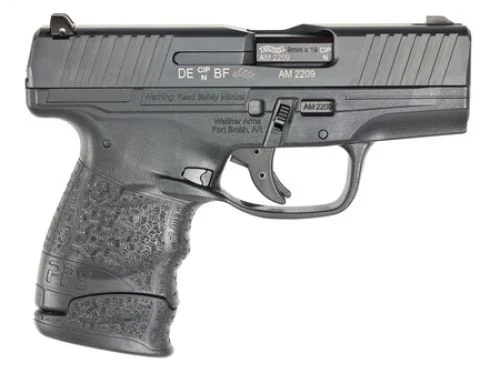
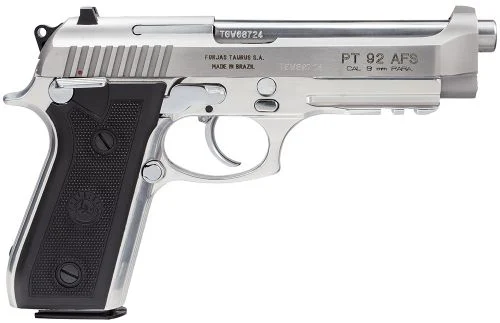
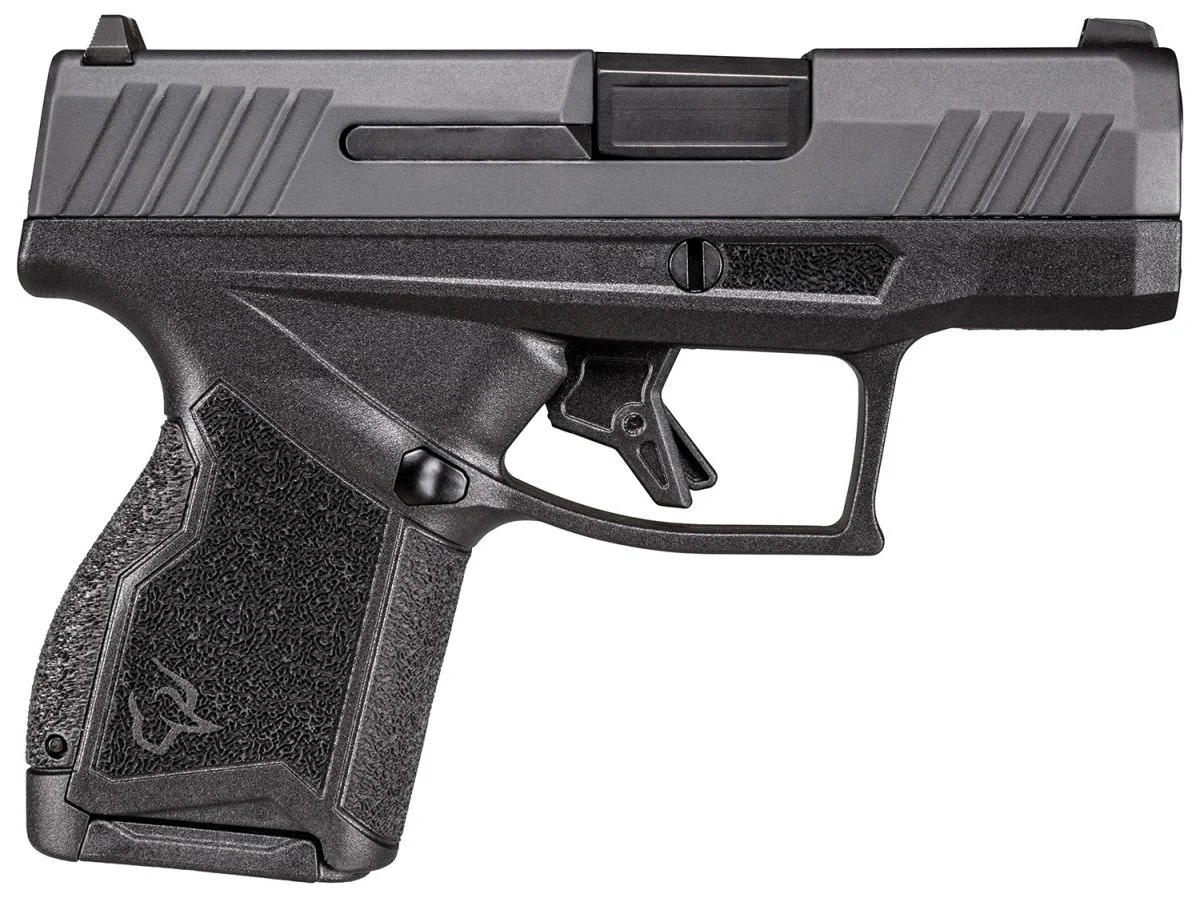
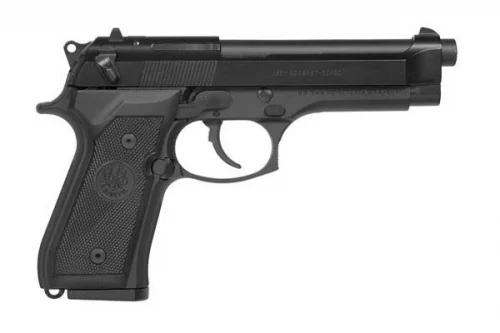
The duty pistol market has settled into a small group of very good striker-fired 9mms. The Glock 17, 19 and 45 remain the reference standard for parts, holsters and aftermarket support. The Sig Sauer P320 in its various sizes is the service pistol of the United States Army and is easy to size to the shooter. The Smith and Wesson M&P 2.0 has the best grip texture in the class, and the Springfield Echelon is the newest serious entry. For a smaller gun that still carries a light, the Glock 19 and the Sig P365-XMACRO are the usual answers.
Buy an optic-ready slide even if you do not mount a red dot right away. Pistol optics have become the default on duty guns for the same reason they took over rifles, and paying once for the cut is cheaper than paying twice for the pistol. Match the footprint to the optic you actually want rather than to whatever plate came in the box.
Ammunition and practice
Practise with the cheapest brass-cased ammunition that runs reliably in your gun, and carry or keep loaded a quality bonded or expanding defensive load that you have shot at least a box of. Buy training ammunition in bulk when you see it; Kentucky shooters go through more 9mm and 5.56 in a summer than they expect.
Storage, and where to shoot
Kentucky does not require firearms to be stored a particular way, but state law makes it a crime to provide a handgun to a minor without parental consent, and a locked box or a quick-access safe by the bed answers both the legal and the practical problem. Keep the storage plan honest: a gun you cannot reach in the dark is not a defensive gun, and a gun a child can reach is a disaster waiting.
Kentucky Fish and Wildlife runs public ranges at Otter Creek, Taylorsville Lake, Veterans Memorial, Miller Welch-Central Kentucky, West Kentucky, Kleber, Curtis Gates Lloyd, Higginson-Henry and the Frankfort headquarters, with a shooting range permit that is free to annual licence holders. The Daniel Boone National Forest keeps four more in the south and east. Start from the catalog, read the carry guide if the pistol will be on your hip, or find your town on the city index.
General information, not legal advice. Current as of September 2026. Laws change; check the official source before you act.